What is mukhwas? The Indian after-meal ritual, explained
Mukhwas is the spoonful of seeds, paan and sweetness that ends an Indian meal. Here is what goes into it, the main types, and how to enjoy it.
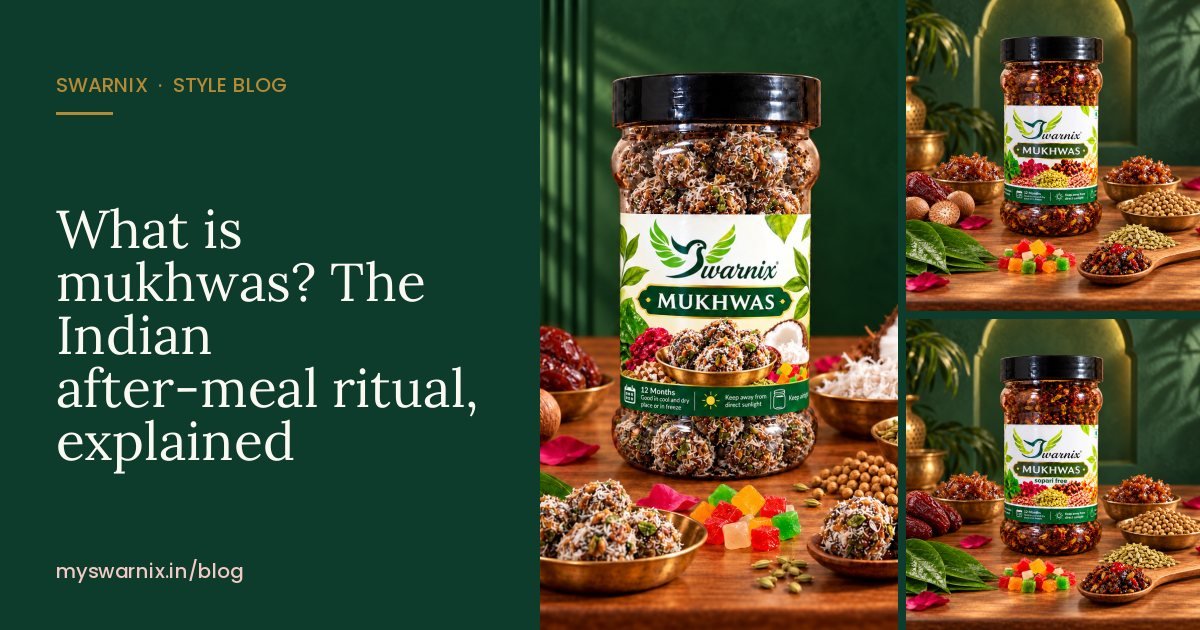
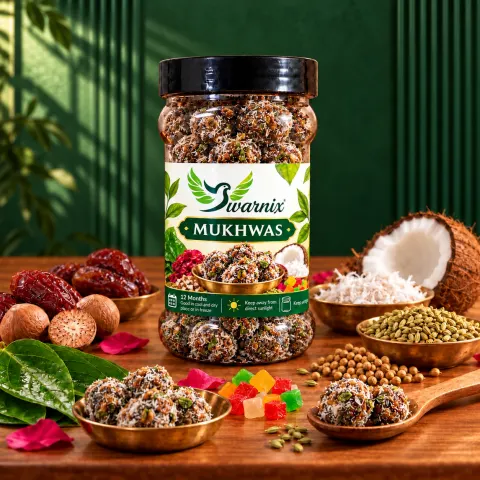
Ask anyone who grew up in a Gujarati home what comes after dinner and the answer is the same: a spoon of mukhwas. The name joins mukh (mouth) and vas (fragrance), and that is exactly its job – to freshen the mouth and close the meal on a sweet note.
What goes into mukhwas
Every family has its own mix, but most start from the same base:
- Variyali (fennel) for a cool, sweet finish
- Dhana dal – roasted split coriander seed, light and nutty
- Something sweet – sugar-coated saunf, dates, gulkand or candied fruit
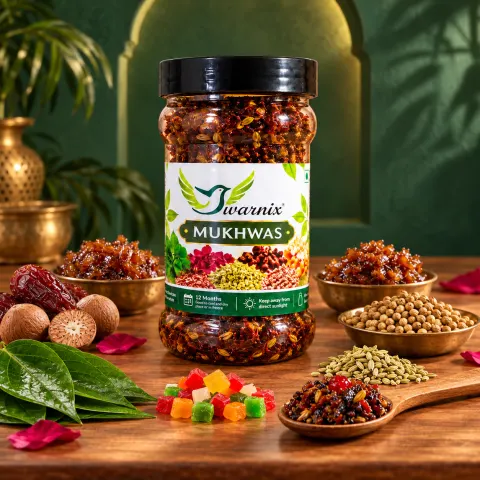
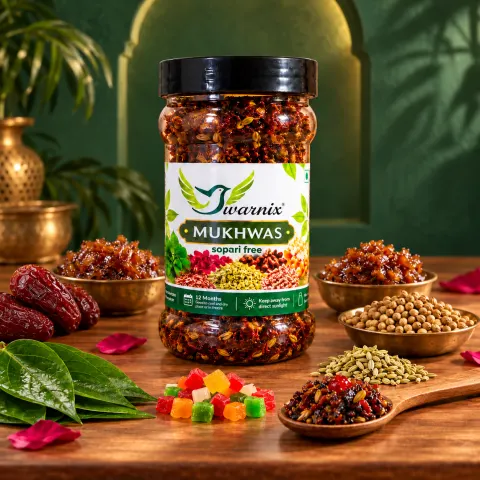
Paan mukhwas adds betel leaf for the taste of a meetha paan. Some blends add sopari (cut areca nut) for crunch; others leave it out.
The main types
- Paan mukhwas – betel leaf, dates and rose; soft and sweet
- Saunf mukhwas – mostly fennel, often sugar-coated
- Tal (sesame) mukhwas – roasted sesame, sometimes with ajwain
- Dry fruit mukhwas – with nuts and seeds
How to eat it
A small spoon is enough. Chew slowly after lunch or dinner and enjoy the flavours as they open up.
How to store it
Close the lid tightly, use a dry spoon and keep the jar away from direct sunlight. A well-sealed jar stays fresh for months.
Try Swarnix paan mukhwas, or the sopari-free blend.
Questions shoppers ask
What is mukhwas made of?
Most mukhwas has fennel (variyali), roasted seeds such as dhana dal, and something sweet. Paan mukhwas adds betel leaf, and many blends add dates, rose petals or candied fruit.
Are you supposed to swallow mukhwas?
Yes. Chew a small spoonful slowly after the meal and swallow it.
Is it mukhwas or mukhvas?
Both spellings are used. The word comes from mukh (mouth) and vas (fragrance).